
In 2017, Julie Dove embarked on the adventure of a lifetime when she and her husband, newly empty nesters, bought a boat to sail around the world for five years. Active by nature, she had always been drawn to movement and the outdoors, enjoying skiing 50+ days a year, dirt biking, hiking, and playing tennis. She also stayed busy running a home-based daycare, both in Kimberley, BC, where she now lives, and in Australia, where she raised her family years earlier.
However, after the COVID-19 pandemic, their daughter became ill, and the couple returned to Canada to help her during her last days. This was an incredibly devastating and stressful time for Julie, who started experiencing issues with her walking, typing, speech, and digestive system. She attributed her mysterious symptoms to the stress of losing her daughter, as well as months of being confined to their boat during the pandemic.
In 2023, after six months of grieving, Julie went to the doctor, who, after performing a few clinical tests, said, “I think you have Parkinson’s.” Julie was told she’d be referred to a neurologist but warned it could take up to a year to see one. Reflecting on that time, Julie recalls thinking, “What? That’s it?” She went home and began her own research, as she had no clue what Parkinson’s disease (PD) was. Unfortunately, like so many women facing a possible diagnosis, Julie couldn’t see herself reflected in the images that came up when she searched online, which were dominated by older men.
The medication she learned about, Levodopa, sounded helpful, but Julie knew she couldn’t possibly wait a year to see the specialist, so she urged her doctor to prescribe it right away. Julie’s doctor agreed, and with just a small dose, her walking and energy improved immediately.
Equipped with a medical treatment to improve her quality of life, Julie began looking into ways she could help herself – nutrition, careful protein timing to not interfere with medication absorption, daily exercise, and stress-reducing techniques. She adjusted to her new normal and adapted her activities accordingly. Julie still skis, and while the days are shorter and the runs less challenging, she is out there most days. She can no longer run a tennis court, so she is mastering pickleball instead. Julie has also had to trade her dirt bike in for an electric mountain bike, but she continues to enjoy adventures with her husband.
Six months after Julie was diagnosed with PD, she met Colleen, who had also just been diagnosed and was shocked. The two began meeting for coffee every few weeks, laughing, crying, and sharing what each of them had learned. Collen is an artist who was struggling to keep doing what she loved, and the support they gave each other became invaluable. Over the next six months, more people were brought into the circle – friends of friends, all newly diagnosed – until what began as informal coffee catch-ups grew into a small support network, including Katey and Deliah. As their group expanded, they wondered whether they should formalize their gatherings into a support group, since there was little else available to help people navigate the diagnosis, especially in a smaller community like Kimberley.
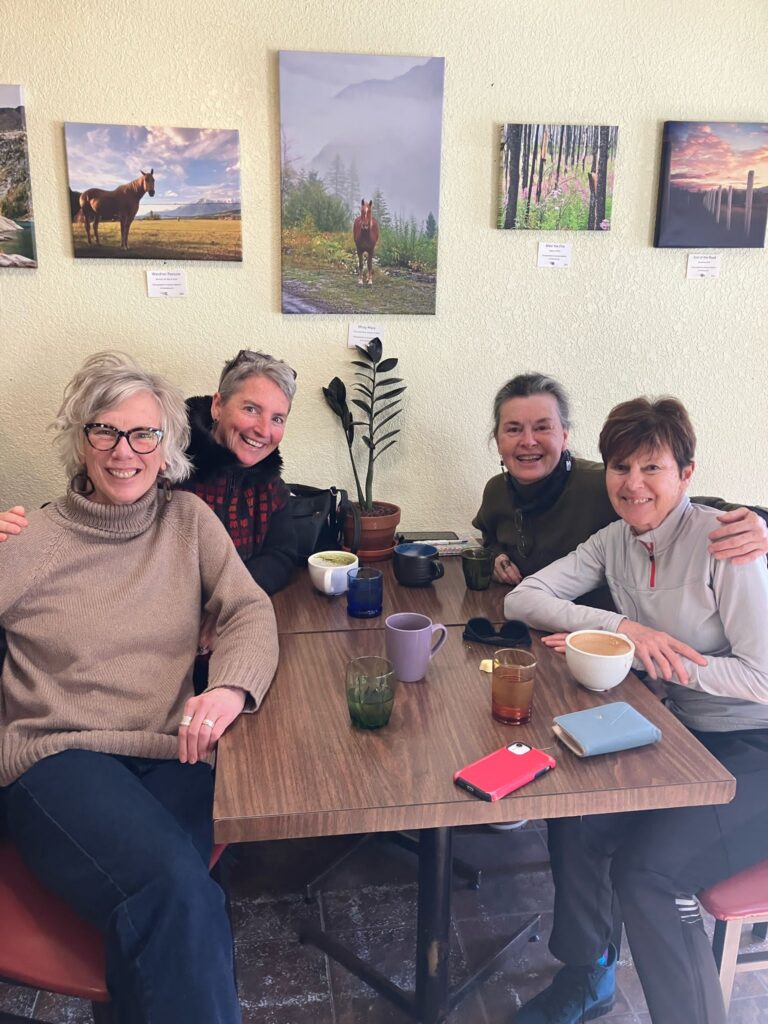
Now the support group officially meets the fourth Sunday of each month and has 10 regular members. They’ve also brought in guest speakers along the way, including physiotherapists who specialize in Parkinson’s, speech therapists, and yoga teachers who guide them through relaxation and movement exercises. Julie says being part of the group has given her a sense of belonging, helping her navigate this major life change without feeling alone. She also finds meaning in supporting people on similar journeys. Julie encourages those with Parkinson’s to try a few support groups until they find one where they truly connect.
In many ways, Parkinson’s has reminded Julie and her husband of the importance of appreciating where they are and who they are today. She says that looking back on the past leaves her feeling disappointed, while thinking too much about the future only pulls her away from the present moment. After years of practicing yoga and meditation, she has come to understand the value of staying grounded in the present.
Her advice to someone newly diagnosed with PD is to learn what lifestyle changes can help, as well as to be open about their diagnosis – you never know who else may be going through the same thing alone. Julie encourages staying active, spending time outdoors, and making space for creative outlets, while also adapting to a lower-stress way of living. Above all, she says, it’s about making the most of the time you have and not waiting to start ticking off that bucket list.