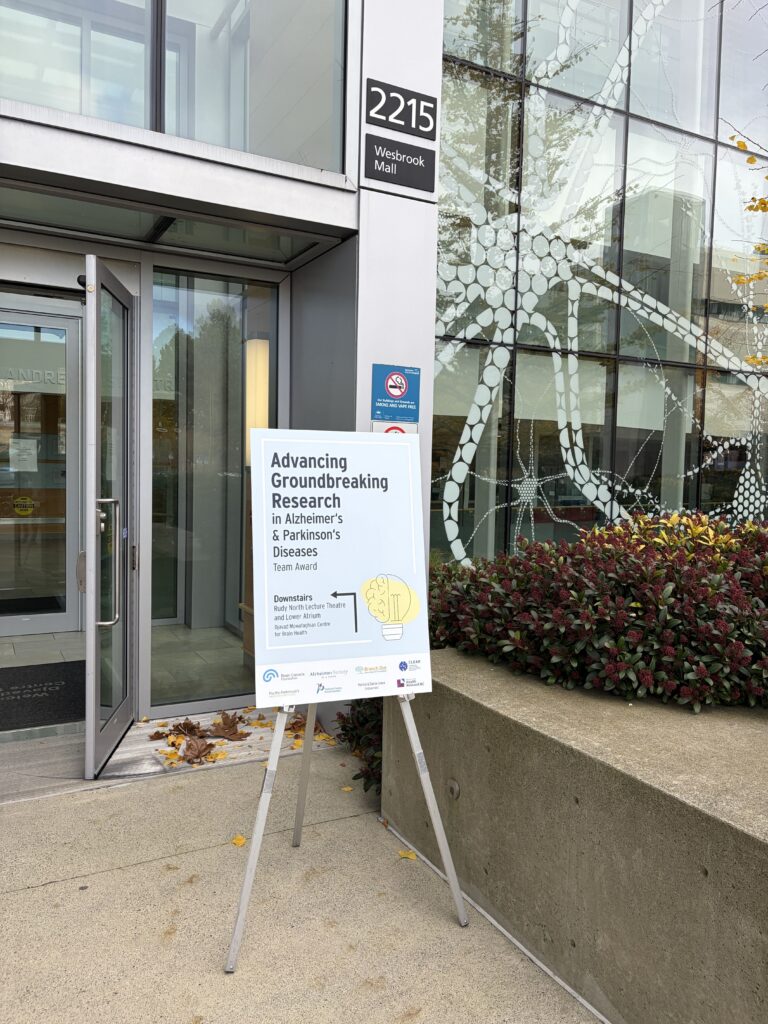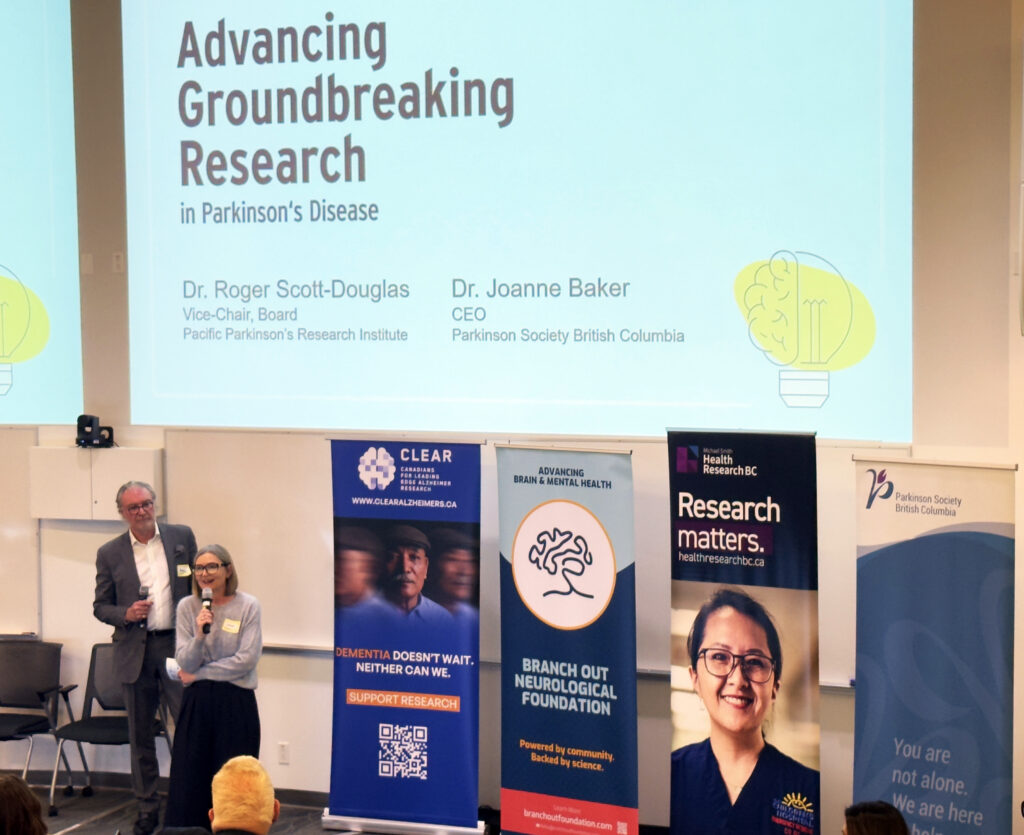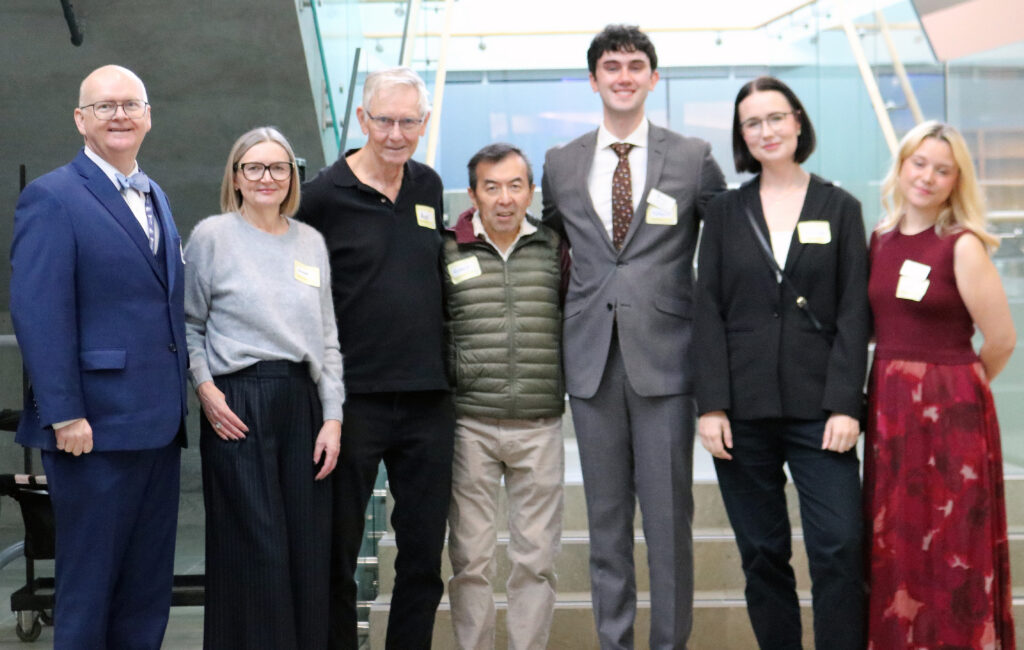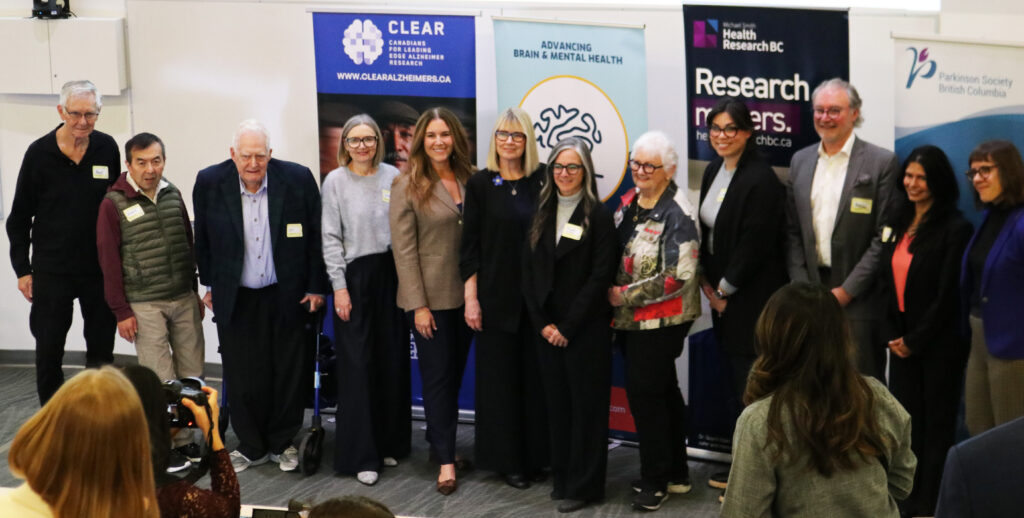
Researchers, community members, and partners gathered on November 20 at the Djavad Mowafaghian Centre for Brain Health at the University of British Columbia (UBC) to celebrate a historic investment supporting Alzheimer’s and Parkinson’s disease research in this province.
Through the Advancing Groundbreaking Research in Alzheimer’s and Parkinson’s Diseases Team Award, eight funding partners, including Parkinson Society BC (PSBC), are investing a combined $3 million to support six BC teams advancing discoveries in neurodegenerative disease research. Of this total investment, PSBC has contributed $425,000.
The teams bring together diverse expertise across neuroscience, biomarkers, artificial intelligence, digital health, clinical health, and population health, addressing important questions about how these conditions develop, how they can be better understood, and how research can contribute to improved outcomes.
The investment reflects a shared commitment to advancing brain health research. By bringing together researchers from different disciplines with people with lived experience, community partners, and organizations, the initiative supports research approaches that are informed by diverse perspectives and real-world needs.
This initiative is made possible by a partnership between Michael Smith Health Research BC, Brain Canada Foundation, Parkinson Society BC, Alzheimer Society of BC & Yukon, Branch Out Neurological Foundation, CLEAR Foundation, Pacific Parkinson’s Research Institute, and the Patrick & Dulcie Lenox Endowment. Through this collective investment, we are supporting advances in neurodegenerative disease research and fostering collaboration among researchers, partners, and research users across BC.
Meet the funded teams
| A blood test for earlier detection There is currently no reliable blood test for early detection or monitoring of treatment response for Parkinson’s disease. This team aims to solve this important gap by investigating a promising biomarker linked to disease severity and testing whether a blood test to identify this biomarker could detect the disease earlier and sharpen how new treatments are studied. Primary applicant: Shyh-Dar Li | A gut connection to brain health People with long-lasting gut inflammation face a higher risk of Alzheimer’s. This team is using mouse models to explore how gut bacteria may shape brain health by studying how different microbiomes affect memory, brain inflammation, blood flow in the brain, and the buildup of proteins linked to Alzheimer’s. Primary applicant: Annie Ciernia |
| Home monitoring that empowers patients Between clinic visits, people living with Parkinson’s are often navigating changes on their own. This team is building and testing an at-home digital system that brings clinical-grade monitoring into the home, giving patients and clinicians real-time insight into early signs of disease progression to guide care together, improve patient safety, and support shared decision-making. Primary applicant: Martin J. McKeown | A sharper picture for Parkinson’s treatment Accurate electrode placement is key to deep brain stimulation in the treatment of Parkinson’s symptoms, but this is not always possible in practice, making the placement more challenging. This team is refining MRI imaging to enhance symptom control by improving the accuracy of electrode placement while making it faster and more comfortable for patients. Primary applicant: Alexander Rauscher |
| What tear drops could tell us about Alzheimer’s Doctors lack an easy, accessible way to detect Alzheimer’s disease early, and blood tests can reflect signals from many organs, not just the brain. This team is exploring whether the eye, as an extension of the central nervous system, holds clues to the brain by studying whether tears can act as a novel non-invasive biomarker for earlier detection. Primary applicant: Joanne Matsubara | Untangling diagnoses in the brain Lewy body disease shares features with both Alzheimer’s and Parkinson’s, making it hard to diagnose. This team aims to uncover the differences and commonalities between these conditions to develop a blood test that will tell them apart, ultimately helping doctors get patients to the right care faster. Primary applicant: Ging-Yuek Hsiung |
“Parkinson Society British Columbia is delighted to support this collaborative investment in research alongside partners who share our commitment to improving neurological health. Bringing together researchers across disciplines and including people with lived experience in the research process helps ensure this work is informed by the needs and priorities of the Parkinson’s community. We look forward to the knowledge and possibilities these teams will advance.”
— Dr. Joanne Baker, CEO, Parkinson Society British Columbia